

Executive Summary
The use of competitor’s trademarks in website meta-tags constitutes trademark infringement under the Indian Trade Marks Act, 1999. Indian courts have consistently held that invisible use of trademarks through meta-tags amounts to infringement, establishing a robust legal framework that protects trademark owners from digital marketplace manipulation. This research paper examines the legal foundations, judicial precedents, and practical implications of meta-tag trademark infringement in India.
Meta Tags and Trademark Infringement: Lessons from the Lenskart vs. Titan Case
The recent Titan Company Limited v. Lenskart Solutions Pvt. Ltd. case in the Delhi High Court has spotlighted a critical issue in Indian digital marketing: using a competitor’s trademark in website meta tags is not just a technical misstep—it’s a violation of the Trade Marks Act, 1999.
What Are Meta Tags and Why Do They Matter?
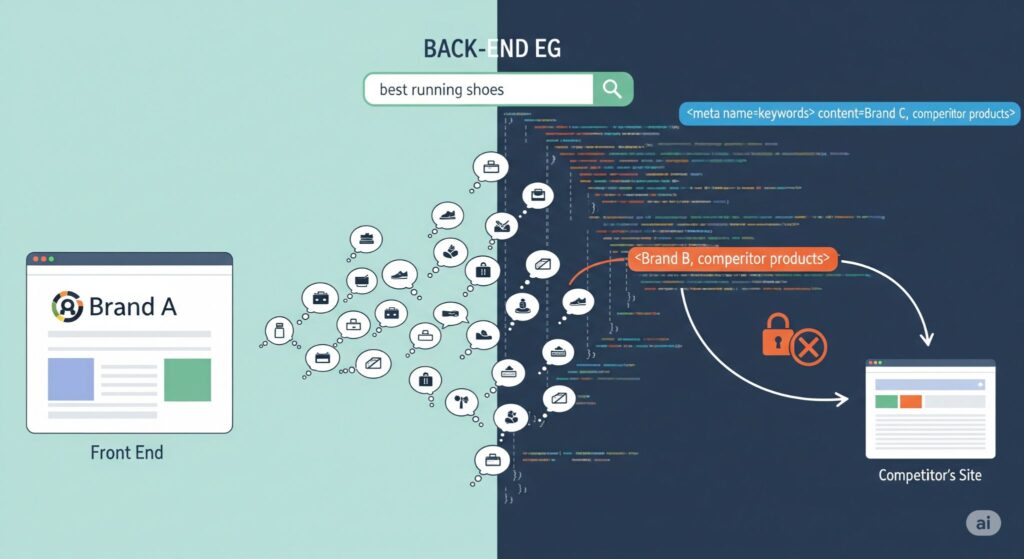
Meta tags are snippets of HTML code embedded in a website’s backend. While invisible to regular visitors, they play a crucial role in search engine optimization by helping search engines understand and rank web pages. When a business uses a competitor’s trademark in its meta tags, it can unfairly divert online traffic and mislead consumers searching for the original brand1.
The Lenskart vs. Titan Case: What Happened?
- • Titan found that Lenskart was using Titan’s trademarks (“Titan,” “Titan Eye+,” “Fastrack”) both visibly on its website and invisibly in its meta tags.
- • Titan argued this practice amounted to trademark infringement and passing off under the Trade Marks Act, 1999, as it could mislead consumers and harm Titan’s brand reputation.
- • Lenskart admitted the use but claimed it was inadvertent and promptly removed the infringing tags upon notice, assuring the court it would not repeat the error.
- • The Delhi High Court accepted Lenskart’s explanation and disposed of the case by binding Lenskart to its undertaking not to use Titan’s trademarks in the future.
Legal Framework and Judicial Precedents
Indian law, particularly Section 29 of the Trade Marks Act, 1999, makes it clear that invisible use of a trademark—such as in meta tags—can constitute infringement Courts have consistently held that:
- • Meta tags are a form of advertising and their misuse can take unfair advantage of or harm the reputation of the trademark owner (Section 29(8))1.
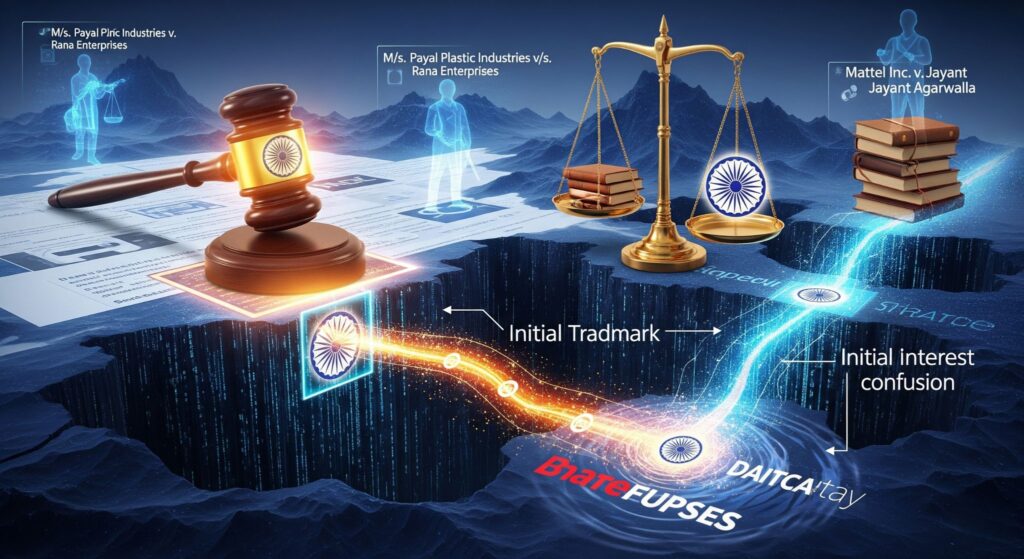
- • The “doctrine of initial interest confusion” applies: even if the consumer realizes the difference before making a purchase, the initial diversion of traffic is enough to establish infringement.
- • Key cases like People Interactive v. Gaurav Jerry, DRS Transit v. Google India, Amway India v. 1MG Technologies, and Kapil Wadhwa v. Samsung Electronics have all reinforced that using a competitor’s mark in meta tags is illegal and actionable.
Fair Use and Defenses
While Indian courts recognize certain exceptions—such as descriptive use, comparative advertising, or legitimate criticism—commercial use of a competitor’s trademark in meta tags rarely qualifies as fair use1. The courts look at factors like intent, commercial gain, and whether the use is genuinely descriptive.
Remedies and Consequences
Trademark owners can seek:
- • Injunctions to stop the infringing use
- • Damages or account of profits
- • Criminal penalties for willful infringement1.
Why This Matters for Your Business
- • Invisible infringement is still infringement: The backend of your website is as legally significant as what’s visible to users.
- • Prompt corrective action counts: Lenskart’s quick response helped avoid harsher penalties, but the legal principle remains strict.
- • Regular audits are essential: Businesses should routinely review their website code and marketing practices to ensure compliance.

Key Takeaways
- • Never use a competitor’s trademark in your meta tags or hidden website code
- • Indian courts treat invisible trademark use as seriously as visible use.
- • If you discover an error, act swiftly and transparently to correct it.
The Lenskart vs. Titan case is a clear reminder: Meta tag misuse is a violation of Indian trademark law, and ignorance or invisibility is no defense. Protect your brand—and respect others’—both on the surface and behind the scenes.
1.Introduction
In the digital age, meta-tags have emerged as powerful tools for search engine optimization and online marketing. However, the practice of using competitor’s trademarks in meta-tags has created significant legal challenges. Meta-tags are HTML code snippets that provide metadata about a webpage’s content[1]. While invisible to website visitors, these tags influence search engine rankings and can redirect consumer traffic from legitimate trademark owners to competitors.
The Indian legal system has taken a progressive stance on this issue, recognizing that invisible use of trademarks can be as harmful as visible infringement. This paper analyzes how Indian courts have interpreted existing trademark law to address meta-tag infringement, establishing precedents that protect intellectual property rights in the digital marketplace.
2. Legal Framework Under the Trade Marks Act, 1999
2.1 Definition of Trademark Infringement
Section 29 of the Trade Marks Act, 1999 defines trademark infringement comprehensively. The provision establishes that a registered trademark is infringed when a person not being a registered proprietor or authorized user uses in the course of trade a mark that is identical or deceptively similar to the registered trademark.
2.2 Section 29(8) – Advertising-Related Infringement
Section 29(8) specifically addresses advertising-related infringement, stating that “a registered trade mark is infringed by any advertising of that trade mark if such advertising takes unfair advantage of and is contrary to honest practices in industrial or commercial matters, or is detrimental to its distinctive character, or is against the reputation of the trade mark”.
This provision has been crucial in establishing meta-tag infringement cases, as courts have recognized that meta-tags constitute a form of advertising.
2.3 Definition of “Use” in Digital Context
The courts have interpreted “use” under Section 29(6) to include invisible deployment of trademarks in meta-tags. Section 29(6) states that “a person uses a registered mark if, in particular, he uses the registered trademark on business papers or in advertising”

3.Judicial Precedents and Landmark Cases
3.1 People Interactive (I) Pvt. Ltd. v. Gaurav Jerry (2014)
This case marked the first time an Indian court defined meta-tagging. The Bombay High Court held that meta-tags are special lines of code embedded in web pages that are used by search engines. The court found that “illegal meta-tags could be detrimental to the plaintiff’s business” and constituted “online piracy”.
The court emphasized that “the defendant has plainly hijacked internet traffic from plaintiff’s website malafidely and with a dishonest intention, thus the defendant has through its action diluted and compromised trademark of plaintiff”.
3.2 DRS Transit Pvt. Ltd. v. Google India Pvt. Ltd. (2017)
This landmark case established that invisible use of third-party trademarks as keywords constitutes trademark infringement. The Delhi High Court held that “use of a registered trademark as a keyword amounts to ‘use’ of a trademark in advertising as contemplated under Section 29(6) of the Trademarks Act”.
The court rejected Google’s argument that keywords are merely back-end triggers and invisible to consumers[12]. Instead, it held that “even invisible use of trademarks constitutes infringement under Indian law”[12].
3.3 Amway India Enterprises Pvt. Ltd. v. 1MG Technologies Pvt. Ltd. (2019)
The Delhi High Court in this case held that “use of Plaintiff’s Trademark AMWAY by third party e-commerce platforms for promoting their own sales was considered use of a mark in meta-tags or advertising”[6][13]. The court invoked Section 29(8) and held that such use amounts to trademark infringement[6].
3.4 Kapil Wadhwa v. Samsung Electronics Co. Ltd.
The Delhi High Court held that “use of third party trademark as meta-tags amounts to infringement as it allows the defendant to ride on the reputation of the plaintiff”[2].
4. Doctrine of Initial Interest Confusion
4.1 Application in Meta-Tag Cases
Indian courts have adopted the doctrine of initial interest confusion in meta-tag trademark infringement cases[14][15]. This doctrine recognizes that trademark infringement can occur even when consumer confusion is temporary and resolved before purchase[14].
The Delhi High Court recently clarified that “the doctrine of ‘initial interest confusion’ entails that there is confusion only at the initial stage and there is no confusion when the transaction for sale and purchase is completed”[14][15].
4.2 Significance in Digital Marketing
This doctrine is particularly relevant for meta-tag cases because consumers may be initially confused by search results but realize the difference upon visiting the website[16]. The courts have held that this initial confusion is sufficient to establish infringement[16].
5. Key Legal Principles Established
5.1 Invisible Use Constitutes Infringement
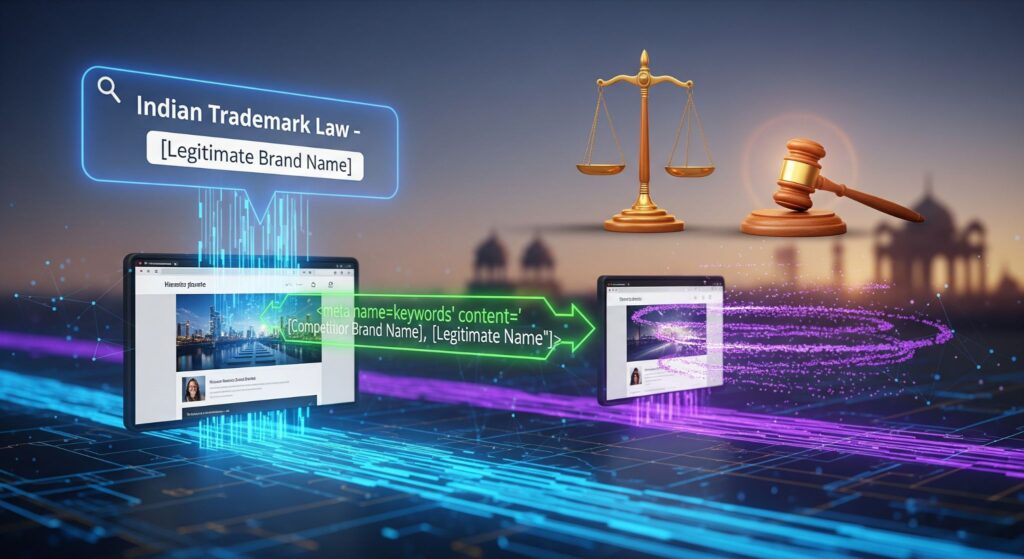
Indian courts have consistently held that “invisible use of trademark as meta-tags/keywords amounts to trademark infringement and is covered by the Trademark Act, 1999”[2]. This principle distinguishes Indian law from some international jurisdictions that require visible use for infringement.
5.2 No Requirement for Consumer Confusion at Point of Sale
The courts have established that infringement can occur even without confusion at the point of sale[2]. The focus is on “initial interest confusion” and the unfair advantage gained by using competitor’s trademarks[2].
5.3 Search Engine Liability
In the DRS Transit case, the court held that “Google cannot claim immunity from liability under Section 79(1) of the IT Act, based on its role in the Ads programme”[7]. This establishes that search engines can be held liable for facilitating trademark infringement through their advertising platforms[7].
6. Defenses and Exceptions
6.1 Fair Use Defense
The courts recognize certain exceptions under the fair use doctrine[17][18]. Permissible uses include:
- • Descriptive use where trademarks are used to describe the goods or services being offered[18]
- • Comparative advertising that is truthful and not misleading[18]
- • Consumer criticism and review websites that use trademarks for legitimate commentary[18]
6.2 Limitations of Fair Use
The courts have held that “commercially using another’s trademark as a meta-tag seldom amounts to fair use”[18]. The key factors considered are:
- • Commercial gain from the use of the trademark[18]
- • Good faith in the use of the trademark[18]
- • Whether the use is descriptive of the actual goods or services[18]

7.Remedies Available
7.1 .Civil Remedies
Under Section 135 of the Trade Marks Act, 1999, courts can grant various civil remedies[19][20]:
- • Injunctive relief (interim and permanent)[19]
- • Damages for losses suffered[19]
- • Account of profits earned by the infringer[19]
- • Delivery up of infringing materials[19]
7.2 Criminal Remedies
The Act provides for criminal penalties under Sections 103-105[21][20]:
- • Imprisonment from 6 months to 3 years[21]
- • Monetary penalties ranging from Rs. 50,000 to Rs. 2 lakhs[21]
- • Enhanced penalties for repeat offenders[20]
7.3 Administrative Remedies
Trademark owners can seek administrative remedies through opposition proceedings during trademark registration[21][20].
- International Perspectives
8.1 United States
The US has a well-established framework for meta-tag trademark infringement dating back to 1997[18]. The initial interest confusion doctrine is widely accepted[18], and courts have consistently held that using competitor’s trademarks in meta-tags constitutes infringement[22].
8.2 European Union
The Court of Justice of the European Union (CJEU) has recognized that “the use of a domain-name and meta-tags corresponding to a competitor’s trade name and trademark can constitute advertising”[23]. The EU framework focuses on misleading and comparative advertising regulations[23].
8.3 Comparative Analysis
India’s approach is more stringent than some international jurisdictions[17]. While some countries require visible use for infringement, Indian courts have established that invisible use is sufficient[2].
9.Challenges and Grey Areas
9.1 Enforcement Challenges
Despite clear legal principles, enforcement remains challenging due to:
- • Technical complexity of identifying meta-tag infringement[1]
- • Jurisdiction issues in cross-border cases[1]
- • Rapid evolution of digital marketing practices[1]
9.2 Balancing Interests
Courts must balance:
- • Trademark owners’ rights against unfair competition[1]
- • Freedom of expression in digital marketing[1]
- • Fair competition in the marketplace[1]
10. Recommendations
10.1 For Trademark Owners
10.1 For Trademark Owners
- • Regular monitoring of competitor’s meta-tags and keywords
- • Prompt action upon discovering infringement
- • Comprehensive trademark registration covering digital use
- • Documentation of reputation and goodwill
10.2 For Businesses
- • Avoiding use of competitor’s trademarks in meta-tags
- • Implementing compliance policies for digital marketing
- • Understanding fair use exceptions and limitations
- • Seeking legal advice before using third-party trademarks
10.3 For Legislative Reform
- • Explicit provisions for digital trademark infringement
- • Clear guidelines for fair use in digital context
- • Enhanced penalties for repeat offenders
- • Streamlined enforcement mechanisms
11. Conclusion
The Indian legal system has successfully adapted traditional trademark law to address the challenges of digital marketing. Through progressive judicial interpretation, Indian courts have established that invisible use of competitor’s trademarks in meta-tags constitutes infringement under the Trade Marks Act, 1999[2]. This approach protects trademark owners from digital marketplace manipulation while maintaining necessary exceptions for fair use.
The doctrine of initial interest confusion has proven particularly valuable in addressing meta-tag infringement, recognizing that consumer confusion at the initial stage is sufficient to establish infringement[14]. The availability of both civil and criminal remedies provides trademark owners with comprehensive protection against meta-tag infringement.
However, continued vigilance and adaptation will be necessary as digital marketing practices evolve. The legal framework established by Indian courts provides a solid foundation for protecting trademark rights in the digital age, ensuring that invisible infringement receives the same legal protection as visible trademark violations[2].
As the digital economy continues to expand, the principles established in these landmark cases will serve as crucial precedents for protecting intellectual property rights in cyberspace. The Indian approach, which recognizes that “invisible use of trademark as meta-tags/keywords amounts to trademark infringement”[2], provides a model for other jurisdictions grappling with similar challenges in the digital marketplace.

0 responses on "Meta Tagging Your Competitor’s Brand is Illegal under the Trademarks Act 1999."