

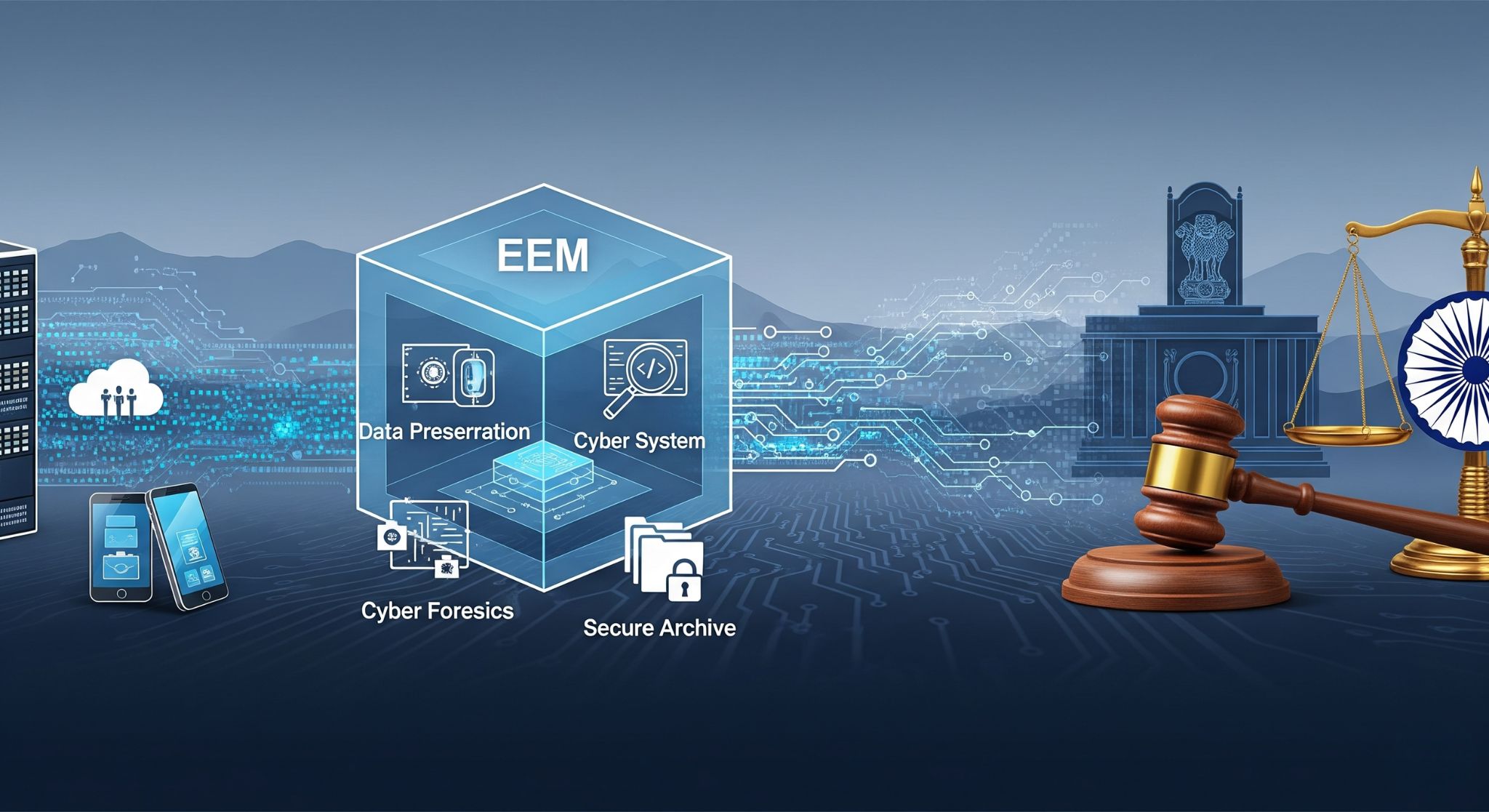
1.What is Electronic Evidence Management (EEM), and why is it important in today’s digital world?
EEM is a structured process designed to ensure the integrity and utility of digital evidence across investigations, compliance, and litigation. It encompasses the identification, collection, preservation, analysis, and presentation of electronic data. In today’s data-driven world, EEM is critical because digital evidence is central to resolving disputes, achieving regulatory compliance, and navigating complex investigative challenges. Failing to manage electronic evidence effectively can lead to significant financial, reputational, and legal repercussions, including penalties for non-compliance and weak cases in legal proceedings. Effective EEM protects against these risks, strengthens legal cases, and ensures transparency and accountability.

2.What are the key components of a comprehensive Electronic Evidence Management solution?
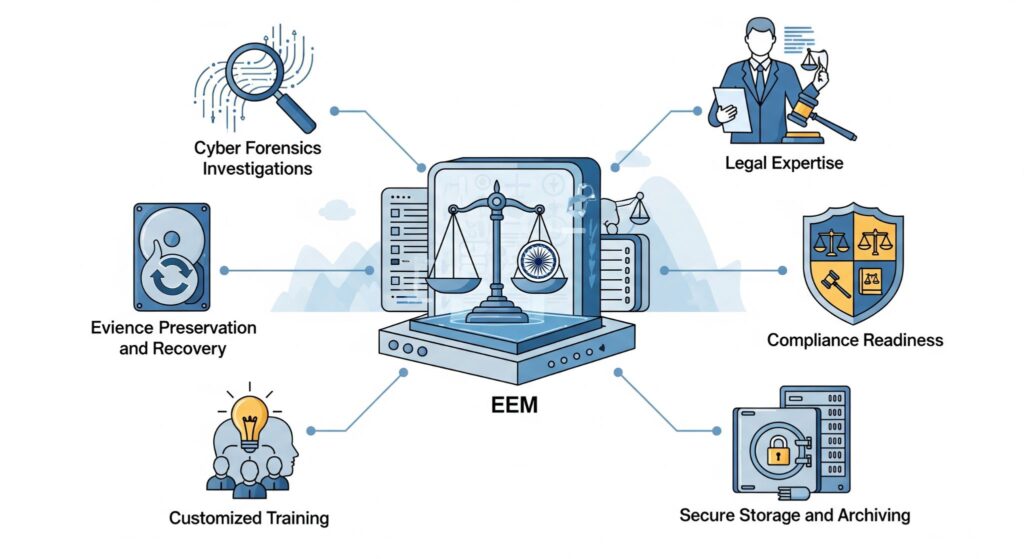
A comprehensive EEM solution includes several critical components: (1) Evidence Preservation and Recovery, which involves using cutting-edge technology to maintain the integrity of evidence and recover lost or deleted files while adhering to legal and evidentiary requirements. (2) Cyber Forensics Investigations, using advanced techniques to reveal digital trails, uncover vital evidence from data breaches, fraud, and other incidents, and produce forensic reports for legal processes. (3) Legal Expertise in Electronic Evidence Management, ensuring collected evidence meets legal standards for admissibility, providing cross-examination preparation and discovery strategies, and organizing evidence for arbitration and mediation. (4) Compliance Readiness, ensuring adherence to domestic and international regulations through tamper-proof records and logs. (5) Secure Storage and Archiving, employing tamper-proof systems for long-term preservation and easy retrieval. Finally, (6) Customized Training and Advisory Services to build internal capacity through training for legal and IT teams to manage evidence effectively.
3. How does EEM ensure the admissibility of electronic evidence in court or other legal proceedings?
EEM ensures the admissibility of electronic evidence by adhering to legal standards, such as Section 63 of the Bhartiya Sakshya Adhiniyam, and by creating detailed documentation to support the chain of custody, ensuring the evidence’s credibility. Legal experts in EEM focus on meeting admissibility requirements, preparing evidence for cross-examination, and organizing it to bolster litigation outcomes. This includes analyzing forensic reports, developing questioning strategies, and presenting evidence concisely and clearly for dispute resolution mechanisms. Proper documentation that tracks the lifecycle of evidence from collection through presentation is essential to demonstrating its integrity.
4. How does EEM assist in cyber forensics investigations, and what types of information can it uncover?
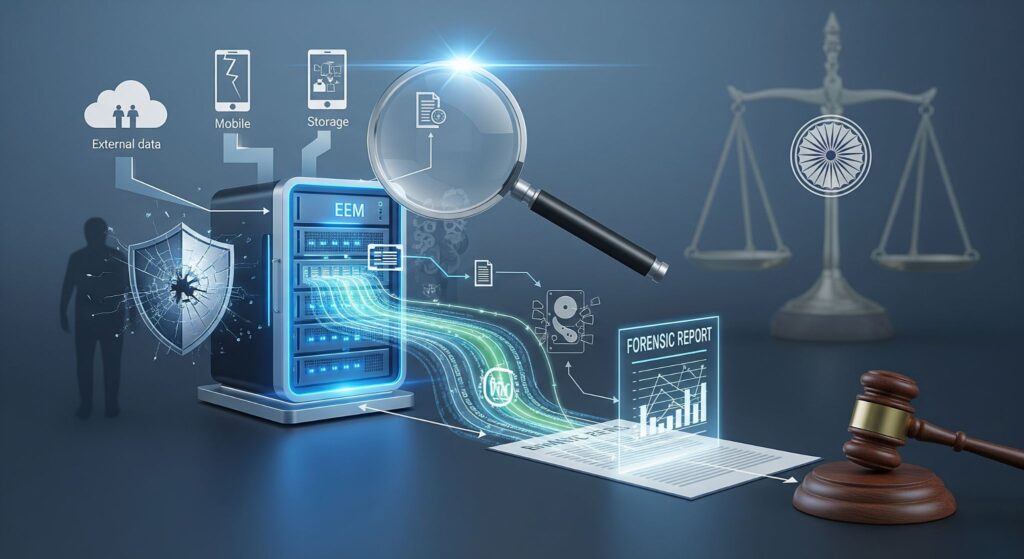
EEM assists in cyber forensics investigations by using advanced techniques to reveal digital trails and uncover vital evidence related to incidents such as data breaches, fraud, and insider threats. This process involves analyzing metadata, email communication trails, and system logs to gain a thorough understanding of events. EEM can reveal patterns, uncover hidden information, and verify the integrity of evidence, ultimately producing detailed forensic reports that stand up to scrutiny in litigation or alternative dispute resolution processes. It helps organizations identify the source of the incident, the extent of damage, and the pathways of any malicious activity.
5. What is the role of legal expertise in Electronic Evidence Management, and how does it support legal teams?
Legal expertise in EEM is essential to navigate the complexities of electronic evidence in legal matters. This includes providing guidance on evidence admissibility and presentation, preparing legal teams for cross-examination by analyzing forensic reports and developing questioning strategies, offering evidence discovery strategies to uncover digital trails in cases of fraud or intellectual property disputes, and organizing evidence for arbitration and mediation. Legal expertise helps ensure the evidence is not only technically sound but also legally defensible.
6. How does EEM help organizations achieve and maintain regulatory compliance, such as with GDPR or the IT Rules in India?
EEM helps organizations achieve and maintain regulatory compliance by ensuring adherence to both domestic and international standards such as GDPR and the IT Rules in India. Key aspects include preparing for audits with tamper-proof digital records and detailed logs, identifying and rectifying potential non-compliance risks, and aligning internal practices with applicable regulations. By implementing these measures, organizations can avoid regulatory penalties, safeguard sensitive data, and demonstrate a commitment to legal and ethical practices.

7. Who can benefit from Electronic Evidence Management solutions, and in what ways?
A wide range of organizations can benefit from EEM solutions, including:
– Corporate Entities: Can mitigate cybersecurity risks, manage internal investigations, and ensure regulatory compliance.
– Law Firms and Lawyers: Can strengthen litigation and arbitration cases with admissible, well-documented evidence.
– SMEs: Can safeguard operational data and navigate regulatory complexities effectively.
– NGOs and Educational Institutions: Can maintain transparency and protect sensitive records. In general, EEM helps these groups reduce risk, improve compliance, and build stronger cases in legal proceedings.
8. Beyond legal and compliance benefits, what are the wider advantages of implementing a comprehensive Electronic Evidence Management system?
- Beyond legal and compliance benefits, a comprehensive EEM system strengthens an organization’s operational trust and resilience. It allows organizations to respond more quickly and effectively to incidents such as data breaches, reducing potential damage and costs. It ensures that organizations have accurate records and the ability to conduct thorough internal investigations. It helps organizations build a culture of transparency and accountability which can lead to enhanced reputation and stakeholders’ trust. It minimizes disruption to operations during legal processes, improves the efficiency of internal audits, and enhances the organization’s ability to manage risks associated with digital assets.

0 responses on "FAQ On Electronic Evidence Management (EEM)"